



Operation Strategy
CSIF’s Mid- to Long-term Strategy/Renewable Energy Market Environment
CSIF set the Medium-Term Management Plan “VISION 2030” in order to enhance unitholders’ value and lay the foundation for the continued growth in the Post-FIT Phase.
Enlarge image
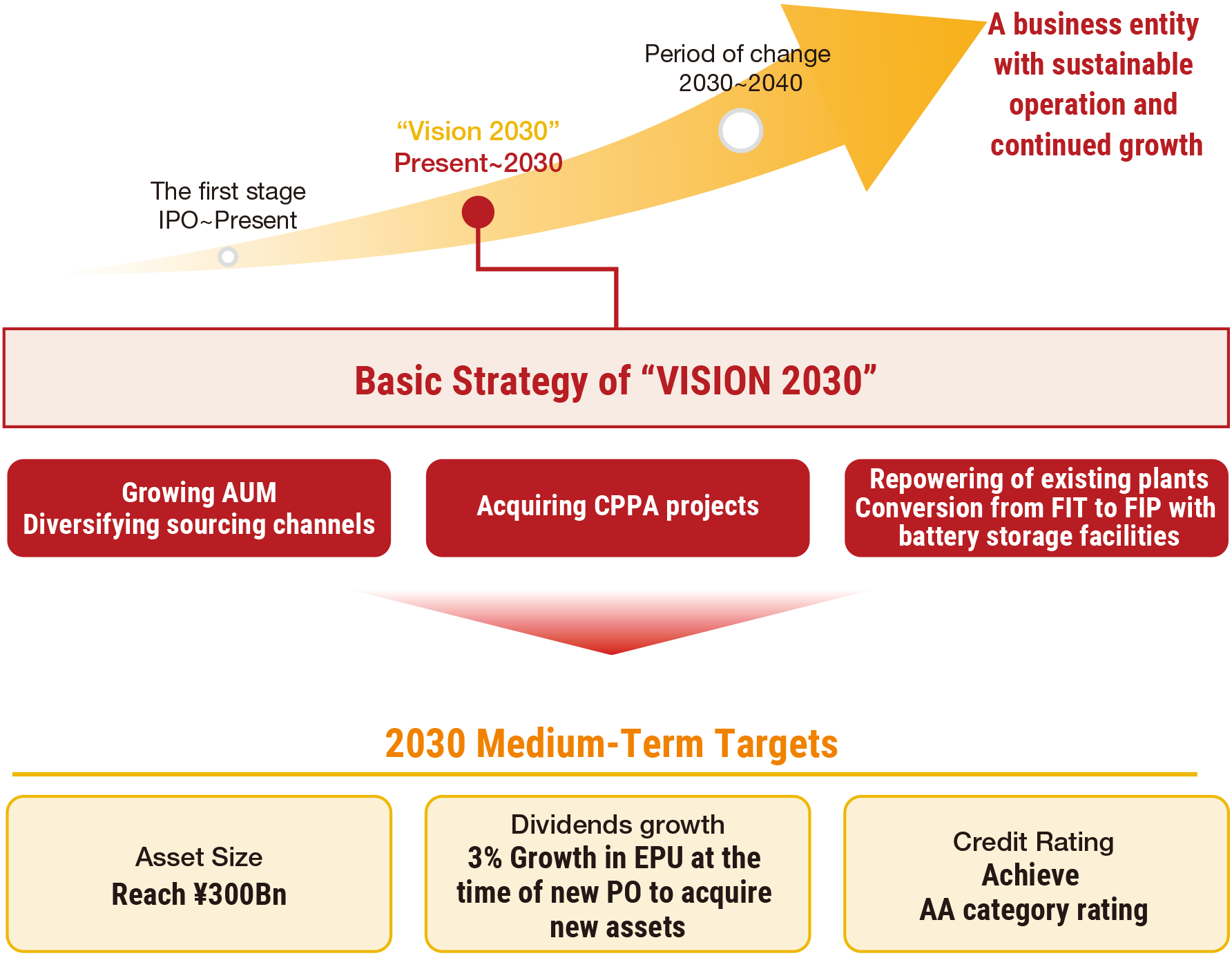
Our approach to responding to changes in the renewable energy market environment is as follows.
Enlarge image
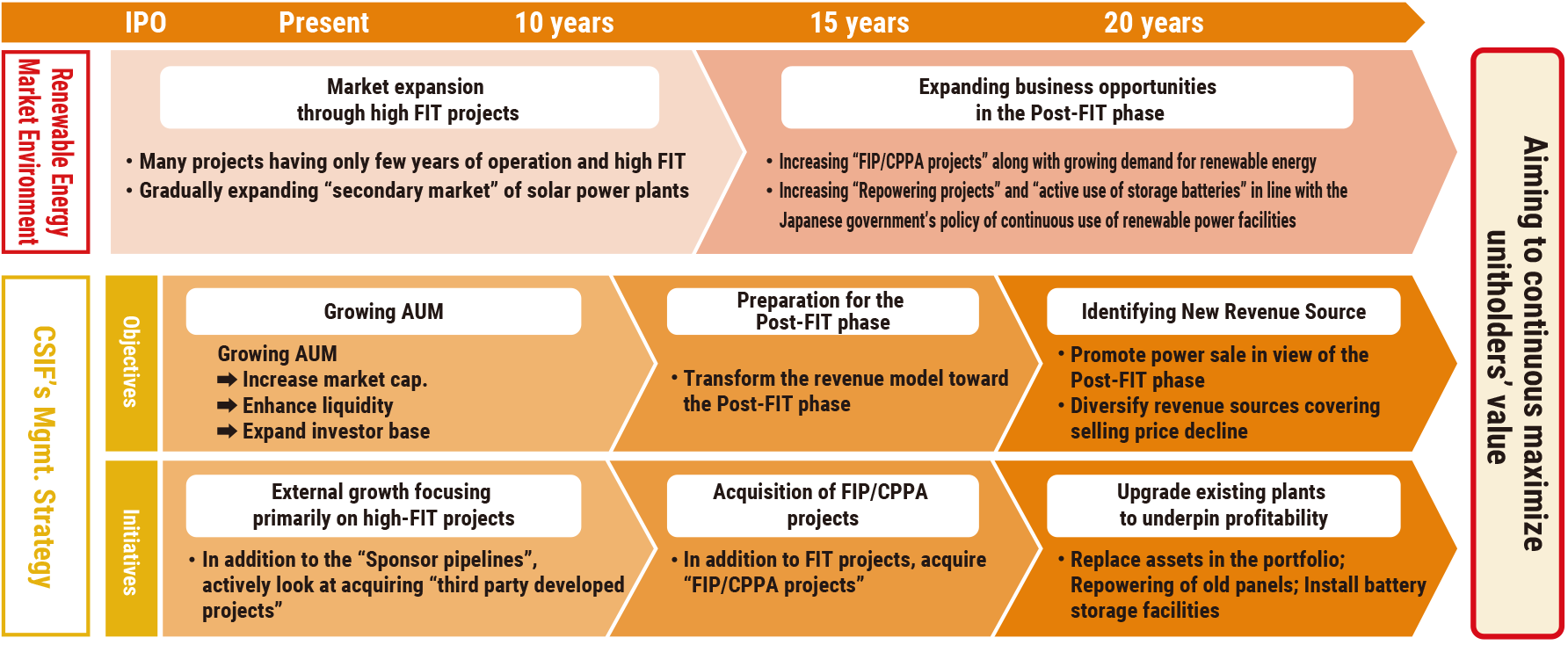
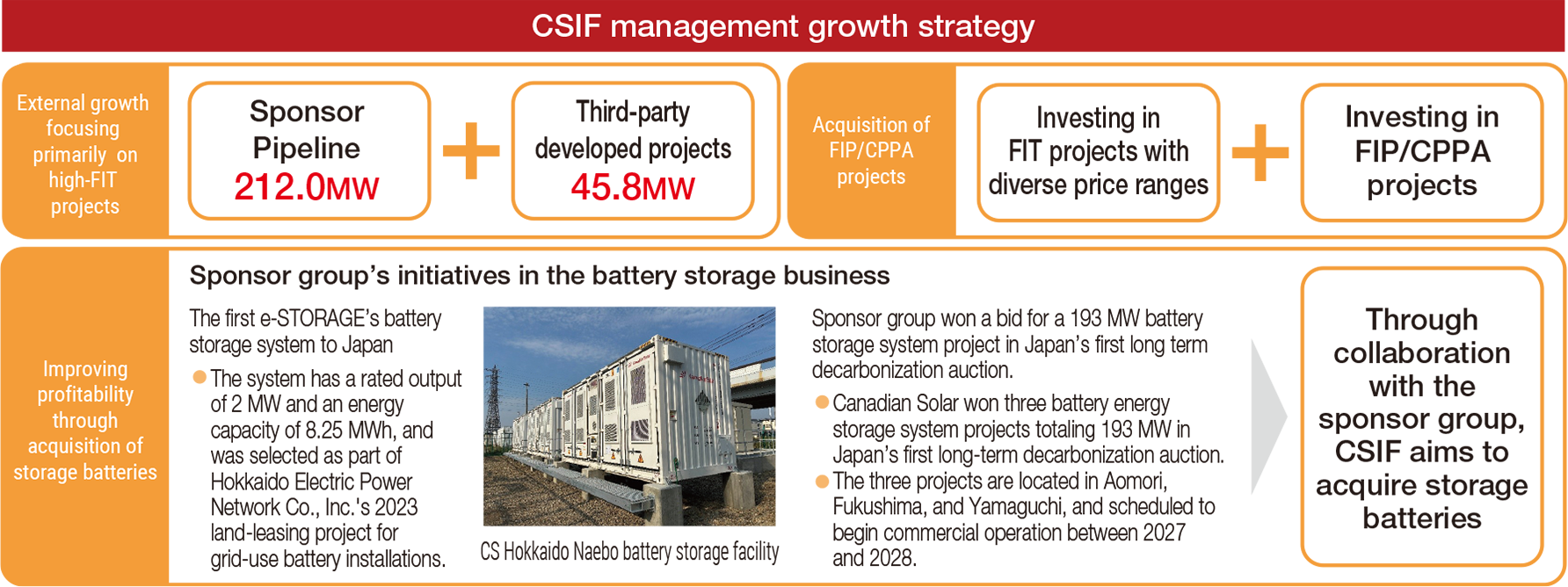
External Growth Policy
CSIF aims to secure stable revenue by acquiring sponsor pipelines with high‑FIT projects and third‑party developed projects. In addition, under the circumstances where installation costs of solar power generation facilities are falling as a result of technological innovations and the CPPA market is expected to grow against the backdrop of strong demand for renewable energy from corporate users, CSIF plans to prepare for the future market by acquiring FIP/ CPPA projects and also looking into possible collaboration with corporate off-takers.
The sponsor group is growing its battery storage business in Japan, and CSIF aims to introduce storage batteries into its portfolio in collaboration with the sponsor group to minimize the impact of output curtailment and to maximize power sale prices by capturing periods of tight supply and demand.
Enlarge image
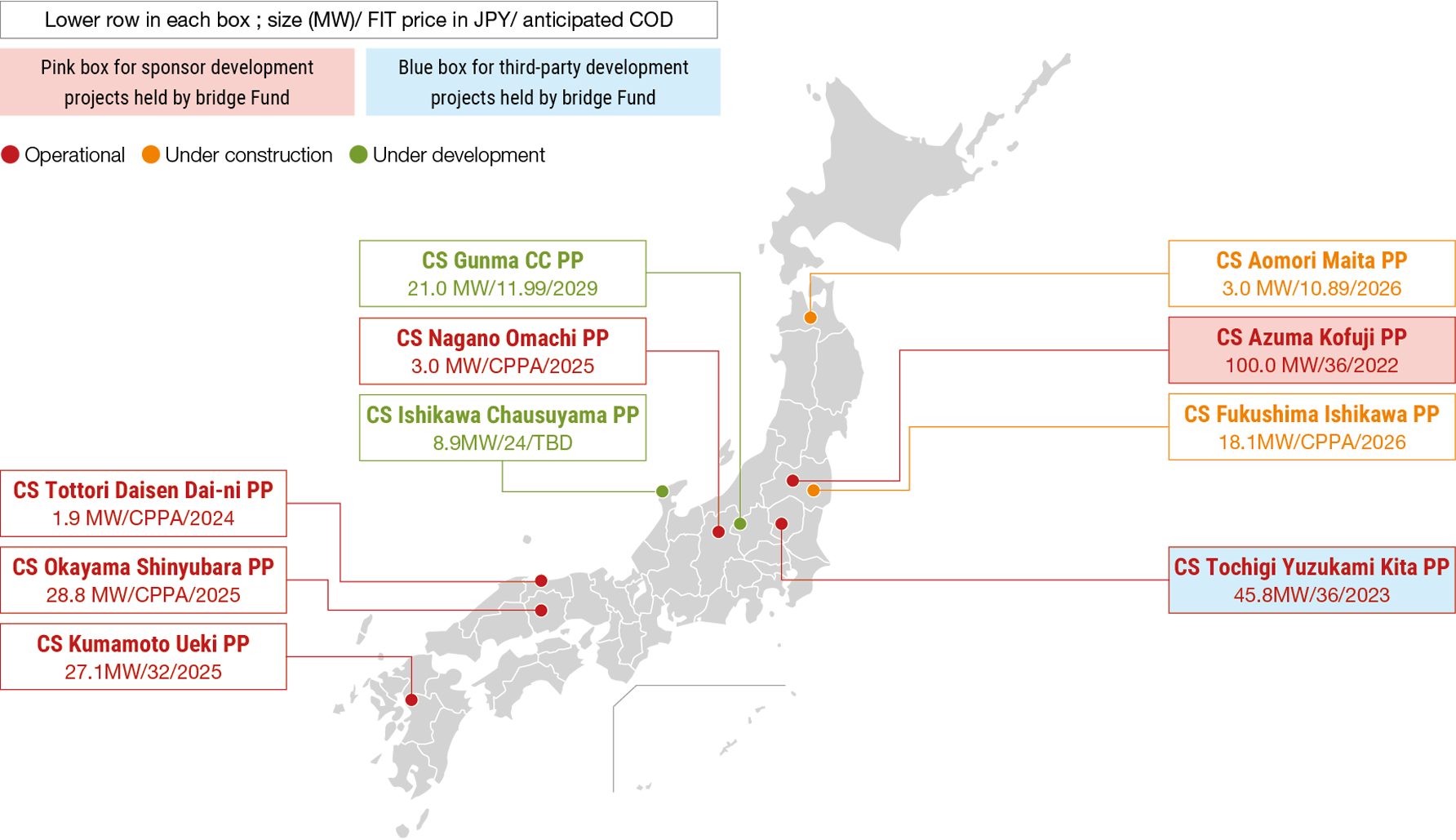
Accelerating AUM growth in the medium term by acquisitions of third-party development projects, in addition to acquisitions from abundant sponsor pipeline

As of June 30, 2026
Enlarge image
Internal Growth Policy
CSIF plans to avert losses of electricity sales revenue due to output curtailment and to capture upside opportunities by considering FIT-to-FIP conversions and installing storage facilities in alliance with aggregators
The scheme is expected to bring revenue larger than the fixed FIT price and drive internal growth
In terms of cost management, CSIF will look at the O&M costs, which account for a relatively large share, and will review existing service agreements at the time of upcoming renewal, aiming to adjust new service fee to the prevailing market level in order to achieve cost reduction.
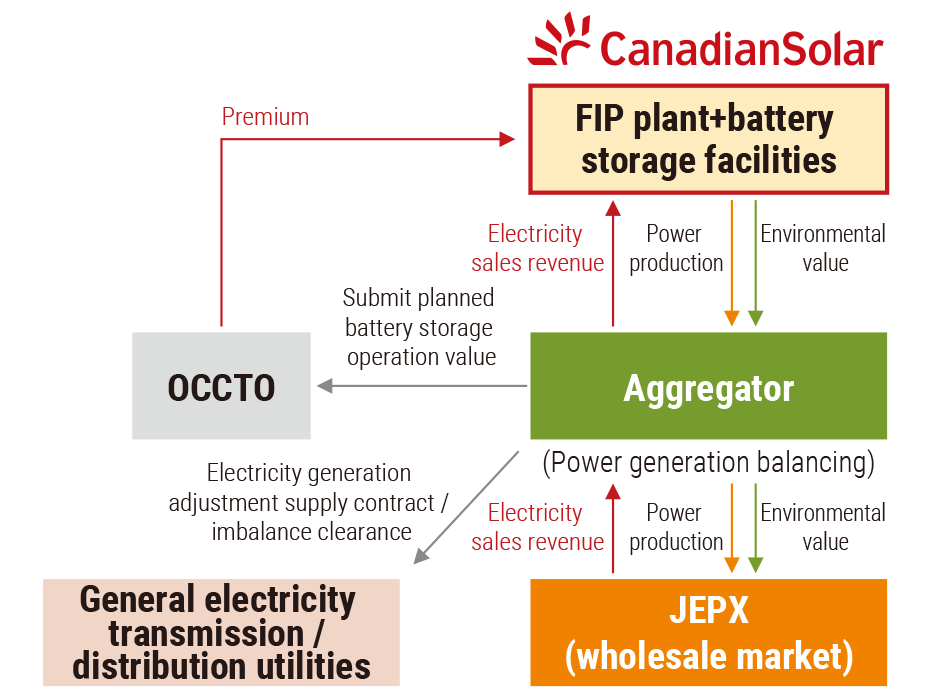
Diagram of the scheme for conversion from FIT to FIP with battery storage facilities
The aggregator prepares battery storage operation plan and bears imbalance risks, while CSIF works to increase FIT revenue
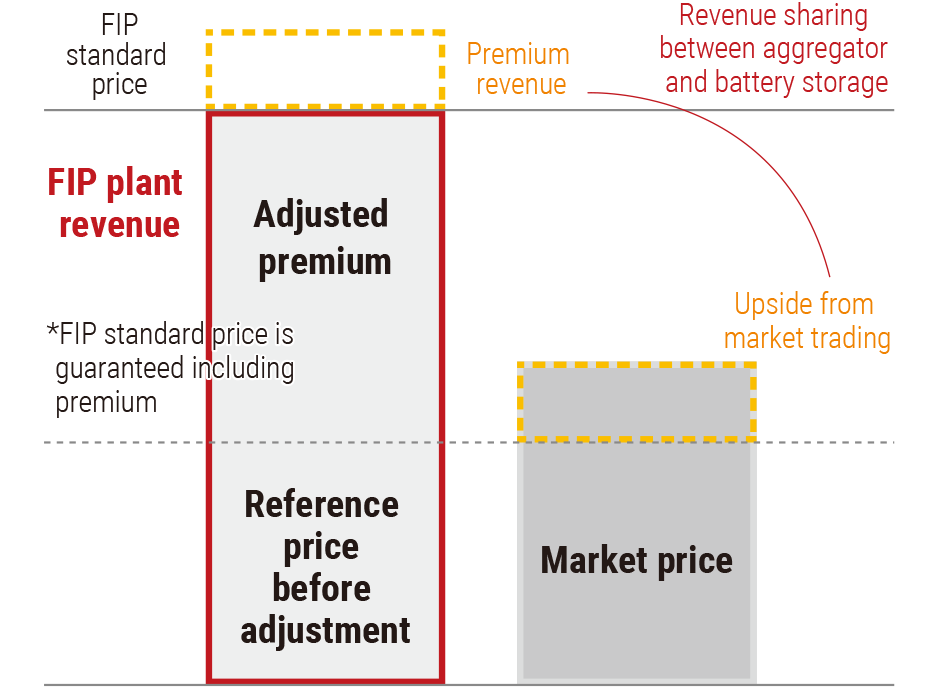
Revenue plan
CSIF seeks to ensure revenue larger than the FIT price by sharing “revenue from electricity sales at market + premium revenue – FIP standard price x actual power output”
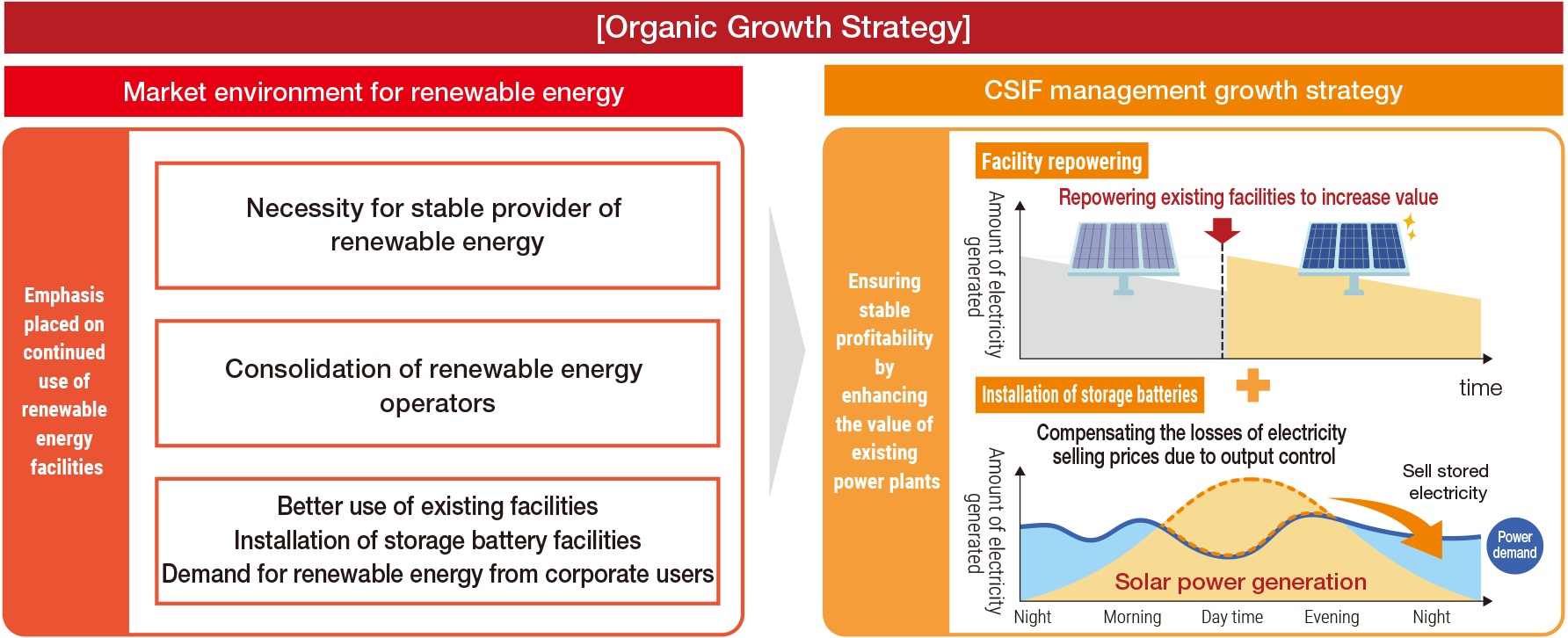
Mass Renewable Energy Introduction / Next Generation Energy Network Committee established by the Agency for Natural Resources and Energy of Japan emphasizes the importance of continuous use of renewable energy power generation facilities.
CSIF aims to increase the value of existing facilities by “re-powering” and installing “storage battery facilities” to make best use of our assets and support the profitability in the Post-FIT phase.
Enlarge image
Debt Profile
Issuer’s ratings
CSIF is the only TSE-listed infrastructure fund rated by both of JCR and R&I as of June 30, 2026.
-
JCR A+ (Stable) (As of October 31, 2025)
-
R&I A (Stable) (As of October 7, 2025)
Key financial indicators (as of June 30, 2026)
CSIF intends to build a stable and sound financial base by managing interest rate using IRS in flexible manner and keeping an appropriate LTV level.
-
- Average borrowing cost
-
As of June 30, 2026
1.2187 %
-
- # of financial institutions
-
As of June 30, 2026
24
-
- DSCR
-
As of June 30, 2026
1.78 x
-
- LTV
-
As of June 30, 2026
56.24 %
-
- Fixed interest rate ratio
-
As of June 30, 2026
71.4 %
Overview of Interest-bearing Debts (as of June 30, 2026)
| Category | Type | Initial amount (yen millions) |
Outstanding (yen millions) |
Interest rate | Interest rate type | Drawdown date | Maturity |
|---|---|---|---|---|---|---|---|
| Loan | Long term | 15,700 | 8,539 | Base rate plus 0.45% (fixed at 0.845% upon executing interest rate swap) |
Floating (Fixed) |
October 31, 2017 |
10 years from drawdown date JCR Green Finance Evaluation |
| Long term | 8,000 | 4,643 | Base rate plus 0.45% (fixed at 1.042% upon executing interest rate swap) |
Floating (Fixed) |
September 6, 2018 |
10 years from drawdown date JCR Green Finance Evaluation |
|
| Long term | 17,000 | 11,685 | Base rate plus 0.45% (fixed at 0.8199% upon executing interest rate swap) |
Floating (Fixed) |
March 8, 2021 |
10 years from drawdown date JCR Green Finance Evaluation |
|
| Long term | 5,800 | 4,810 | Base rate plus 0.45% (fixed at 1.2695% upon executing interest rate swap) |
Floating (Fixed) |
January 19, 2023 |
10 years from drawdown date JCR Green Finance Evaluation |
|
| Long term | 5,800 | 4,810 | Base rate plus 0.45% | Floating | January 19, 2023 |
10 years from drawdown date JCR Green Finance Evaluation |
|
| Long term | 4,300 | 3,832 | Base rate plus 0.45% | Floating | January 29, 2025 |
5 years from drawdown date JCR Green Finance Evaluation |
|
| Long term | 2,300 | 2,300 | Base rate plus 0.45% | Floating | January 20, 2026 |
5 years from issuance date JCR Green Bond Evaluation |
|
| Short term | 1,500 | 1,500 | Base rate plus 0.40% | Floating | January 20, 2026 |
1 years from issuance date JCR Green Bond Evaluation |
|
| Bond | Long term | 1,400 | 1,400 | 1.573% | Fixed | October 24, 2024 |
5 years from issuance date JCR Green Bond Evaluation |
| Total / Average | - | 43,521 | - | - | - | - | |