Operation Strategy
Canadian Solar Group
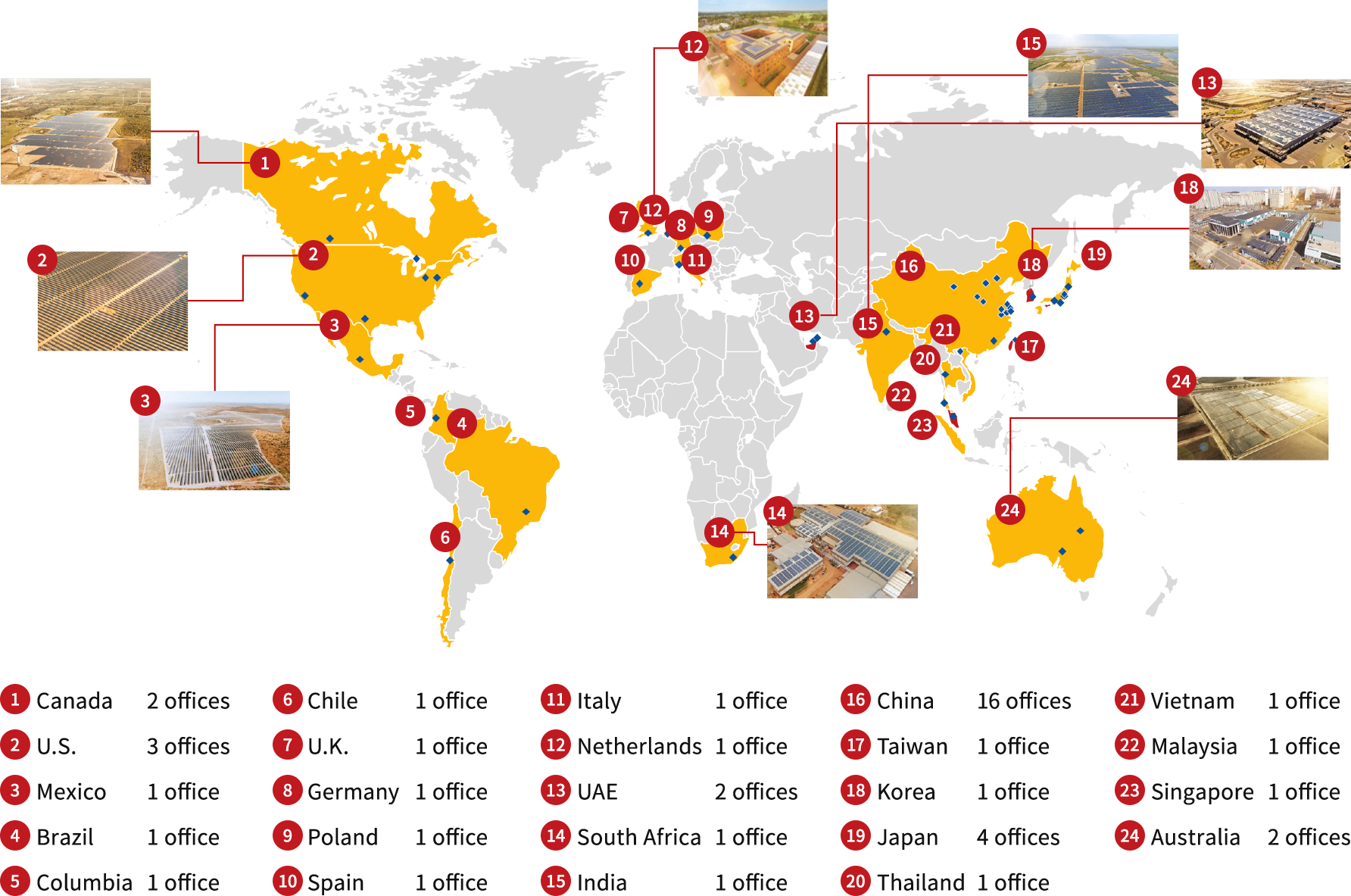
Canadian Solar Group, CSIF’s sponsor, is a global company engaged in the manufacturing and sale of solar panels etc, as well as the development and operation of solar power plants, It was established in Ontario, Canada in 2001 and has been listed on the NASDAQ stock exchange since 2006. The company had more than 13,500 employees in 24 countries and has annual sales of approximately $5.3 billion (approximately 700 billion yen at current exchange rates) for the fiscal year ending December 31, 2020. The group entered the Japanese market in 2009 and has been selling solar panels for residential and industrial uses. The sponsor has also been involved in the development of solar power plants since the early days of renewable energy, as the Feed-in Tariff system for solar power generation started in Japan in 2012.
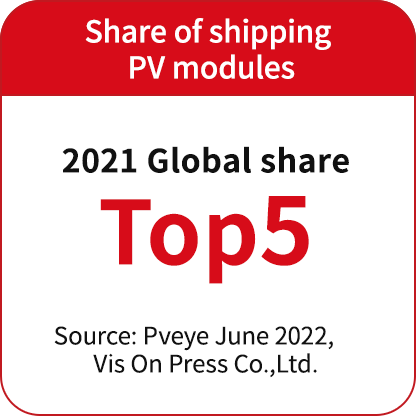

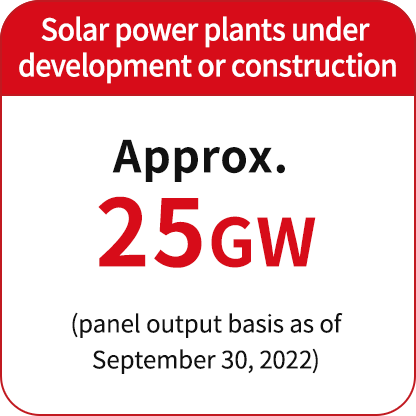
Global Sponsor Pipeline (panel output)(note) (as of 2022)
As of September 30, 2022
-
- Module and System solutions (MSS) segment
- 18 countries
-
- Energy segment
- 18 countries
-
- Solar panel factory
- 4 countries (17 factories)
Enlarge image
Unique Aspects of the Fund
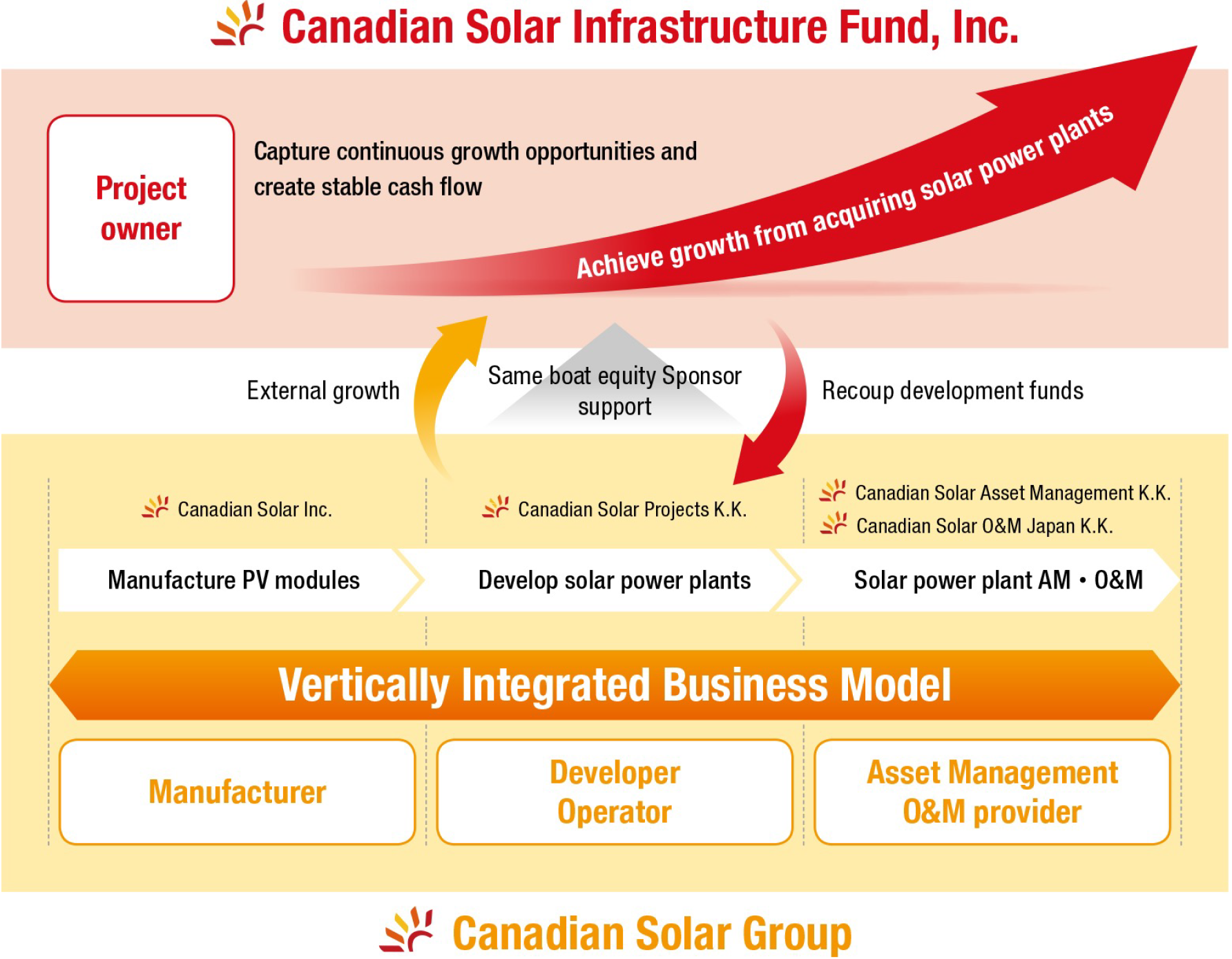
Advantageous Operation Based on the Vertically-Integrated Model of the Group
Prominent knowledge acquired by the Group as the total solution provider of solar power generation is fully utilized for the operation of CSIF. The uniqueness of the vertically integrated model of the group is shown as below.
The image of the value chain of renewable energy business at Canadian Solar Group
Enlarge image
Solid Bank Formation
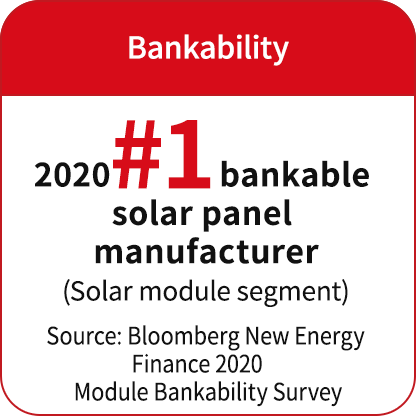
Currently, we have created a strong bank formation consisting of a total of 23 financial institutions, including five banks consisting of three megabanks as well as SBI Shinsei Bank and Sumitomo Mitsui Trust Bank as arrangers and co-arrangers, and we believe that we have established a financing structure for future asset expansion.
Global Offering
In the past three public offerings, including the IPO, CSIF has raised funds from both domestic and overseas investors through global offerings. We believe that having overseas institutional investors as unitholders will enable us to manage our assets with an awareness of global standards and improve the liquidity of our investment units in the market. It will also contribute to stabilizing our fund-raising capacity in the future by expanding the number of institutional and individual investors in Japan.
Financial Summary
Financial Soundness Attributed to Fixed Interest Rate Conversion / LTV Level is Under Stable Controls
December 31, 2022
-
- Fixed-to-variable
interest rate ratio(Note1) - 100.00 %
- Fixed-to-variable
-
- DSCR(Note2)
- 2.29
-
- LTV(Note3)
- 49.91 %
(Note1)“Fixed-to-variable interest rate ratio” refers to the ratio of fixed interest rate liabilities to total interest-bearing liabilities at that time.
Variable interest rate liabilities that were converted to fixed interest rate liabilities through interest rate swap agreements were deemed as fixed interest rate liabilities.
(Note2)DSCR, or Debt Service Coverate Ratio is calculated as the sum of our operating income, depreciation costs and the increased portion of the reserves in our reserve fund for repair fees divided by the sum of our loans payable and interest expenses for the relevant fiscal period. DSCR is an operating measure to illustrate the ability to meet principal and interest payment obligations on existing loan payable.
(Note3)Loan to value, or LTV is calculated as interest-bearing debt divided by total assets as of the end of the relevant fiscal period multiplied by 100.
Credit rating
| Rating Agency | Subject to Rating | Renewal Date | Rating | Outlook |
|---|---|---|---|---|
| Japan Credit Rating Agency, Ltd. | Long-term Issuer Rating | August 10, 2022 | A | Stable |
| The 1st Unsecured Investment Corporation Bond (only for Qualified Institutional Investors) | August 10, 2022 | A | ー | |
| Rating and Investment Information, Inc. | Long-term Issuer Rating | July 27, 2022 | A- | Stable |
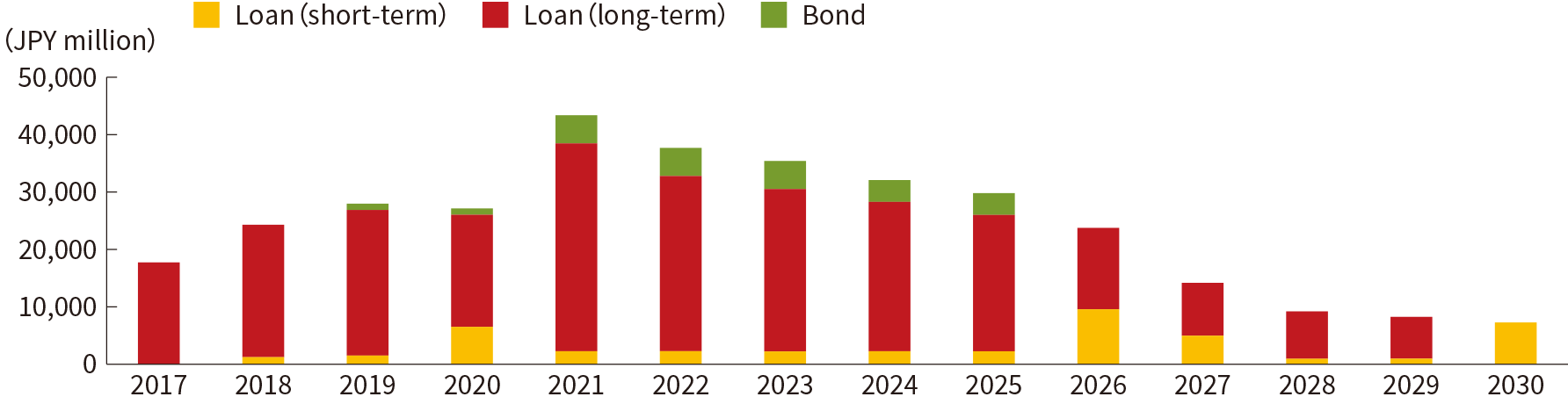
Historical Balance of Interest-bearing Debt
Enlarge image